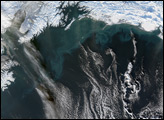
May 20, 2002JPEG
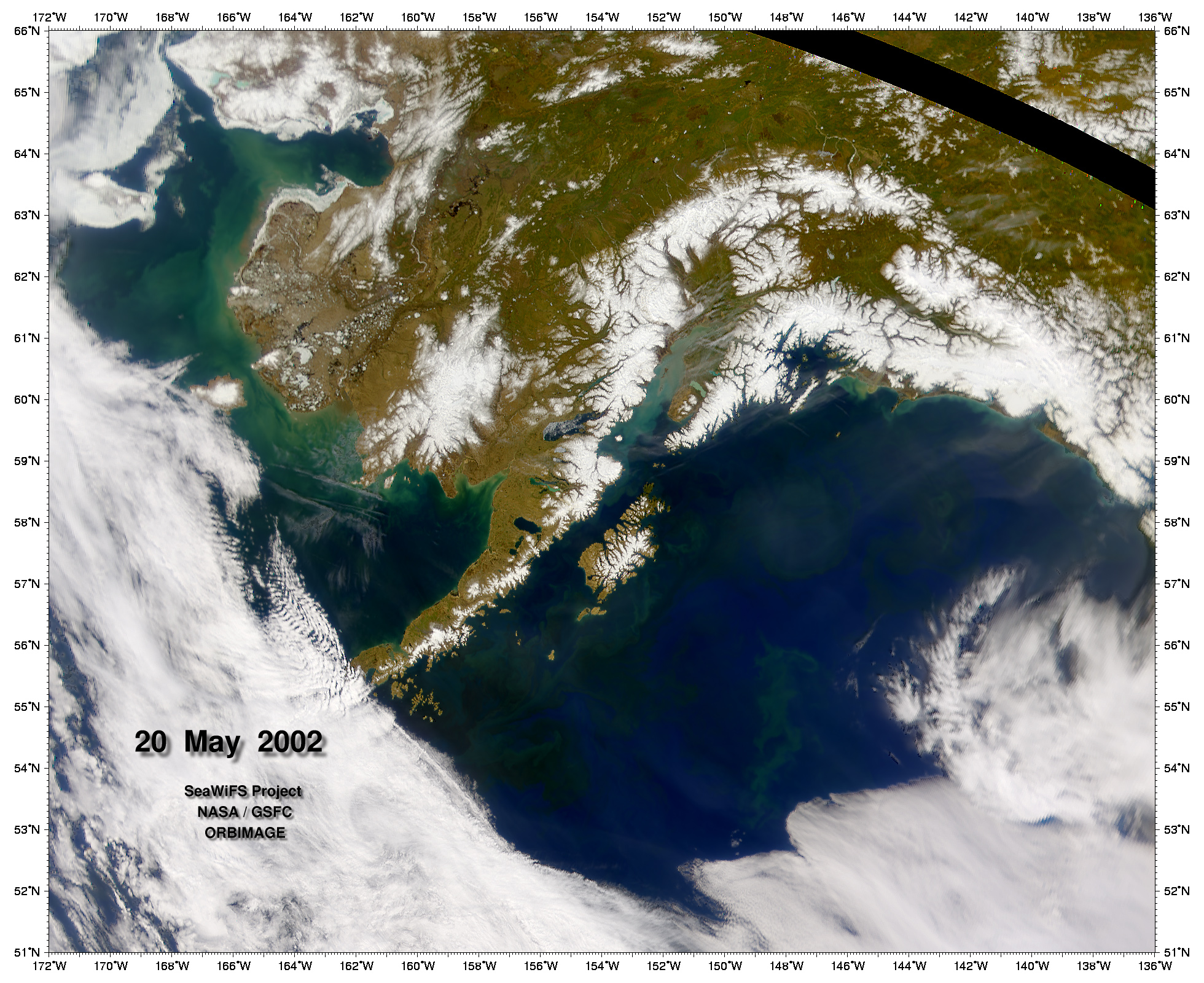
A large phytoplankton bloom colored the surface waters of the Gulf of Alaska various shades of green on May 20, 2002. There also appears to be a lot of sediment being washed into the coastal waters all along Alaska’s shoreline, coloring the waters a light brown. This sediment is probably carried by the snowmelt carried off the land as the spring thaw sets in. This true-color image was capture by the Sea-viewing Wide Field-of-view Sensor (SeaWiFS), flying aboard the OrbView-2 satellite.
Image courtesy the SeaWiFS Project, NASA GSFC, and ORBIMAGE

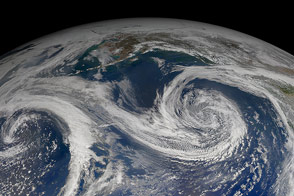
A confluence of changing weather and abundant nutrients sets the table for a feast of phytoplankton.
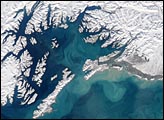
Soft shades of turquoise and tan color the waters of the Gulf of Alaska and Prince William Sound in this photo-like image captured by the Moderate Resolution Imaging Spectroradiometer (MODIS) on NASA’s Aqua satellite on March 13, 2008. Though the swirls may look delicate from space, they hint at an ocean in turmoil. Strong winds and high waves likely churned the ocean, bringing sediment to the surface in the shallow waters over the continental shelf. The deeper waters beyond the shelf edge in the lower right corner of the image are dark blue, not clouded by sediment.
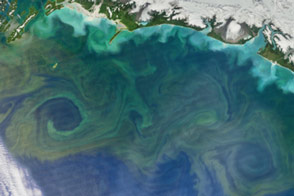
Meltwater from Alaska’s glaciers washed into the Gulf of Alaska, delivering nutrients that gave rise to a colorful phytoplankton bloom.
The winter-white Alaska shoreline provides a vivid contrast to the turquoise swirls in the black waters of the Gulf of Alaska. This burst of color in an otherwise black-and-white scene is caused by sediment, ground into fine powder by mountain glaciers and carried into the Gulf of Alaska through many waterways. The largest contributor of sediment shown in this photo-like image is the Copper River, immediately east of Prince William Sound.